
How to Choose Materials That Transform Your Home
Introduction
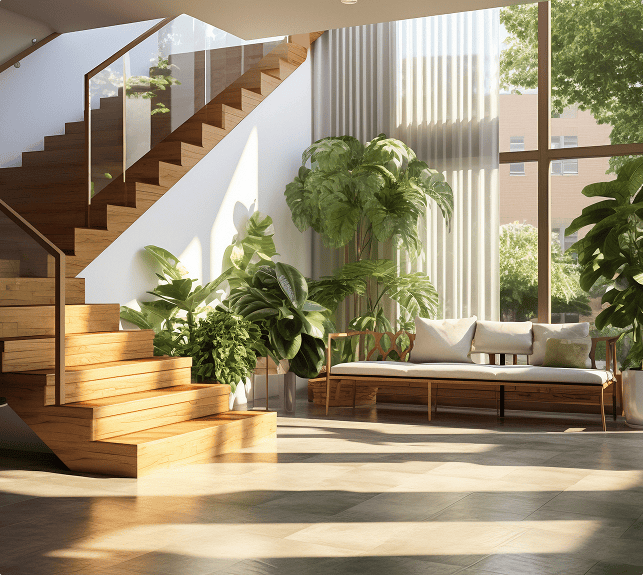
A staircase is far more than a functional element in your home—it’s a statement piece that sets the tone for your interior design. Whether you’re renovating an existing property or designing a new space, choosing the right staircase materials and design can elevate your home’s aesthetic and create a lasting impression.
At Style Stairs, we’ve helped hundreds of homeowners navigate this decision. Here’s what you need to know.
Why Staircase Design Matters
Most people overlook staircases when planning their interiors. They see them as a necessary component, not a design opportunity. This is a missed chance.
A well-designed staircase:
- Connects different levels of your home visually and functionally
- Creates a focal point that draws the eye
- Influences how light moves through your space
- Sets the architectural language for adjacent rooms
- Can increase property value significantly
The material you choose—wood, glass, concrete, or a combination—impacts durability, maintenance, safety, and how your home feels to move through it.
Material Choices: Finding Your Style
Solid Wood: Timeless Elegance
Solid wood remains the most popular choice for residential staircases, and for good reason. Each wood species has its own character.
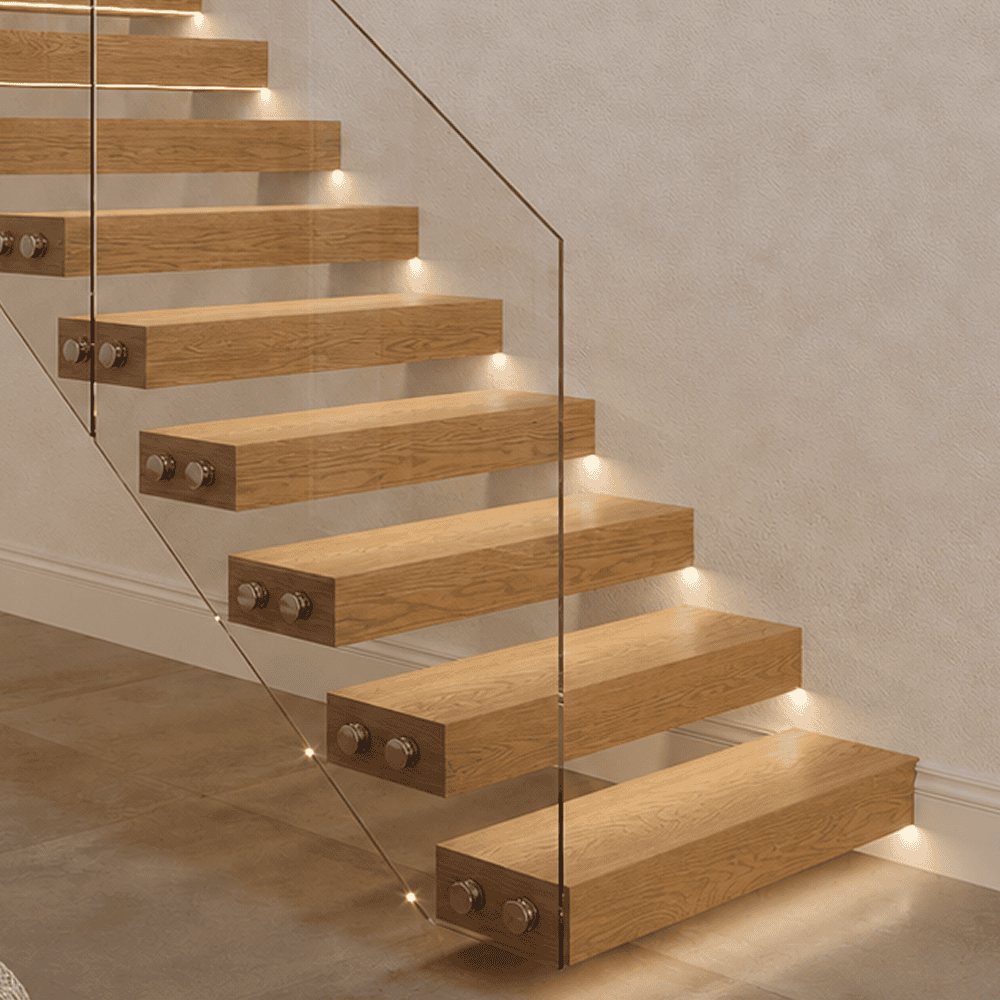
Solid Oak offers classic warmth and distinctive grain patterns. It’s robust enough for high-traffic homes and develops a beautiful patina over time. If you want traditional charm with proven durability, oak is your answer.
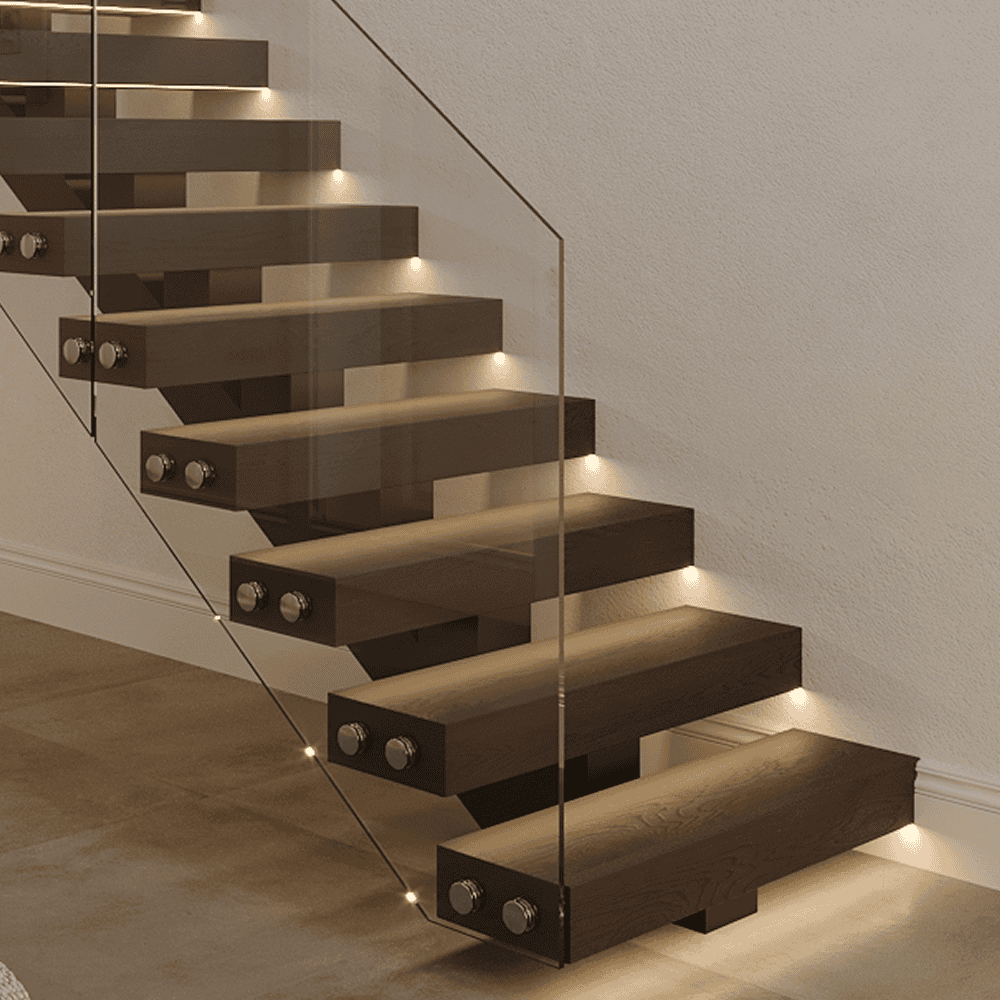
Natural Walnut speaks luxury. Its rich, dark tones create sophisticated visual impact. Walnut is perfect for contemporary homes or dramatic feature staircases. It requires careful finishes to protect against moisture and wear.
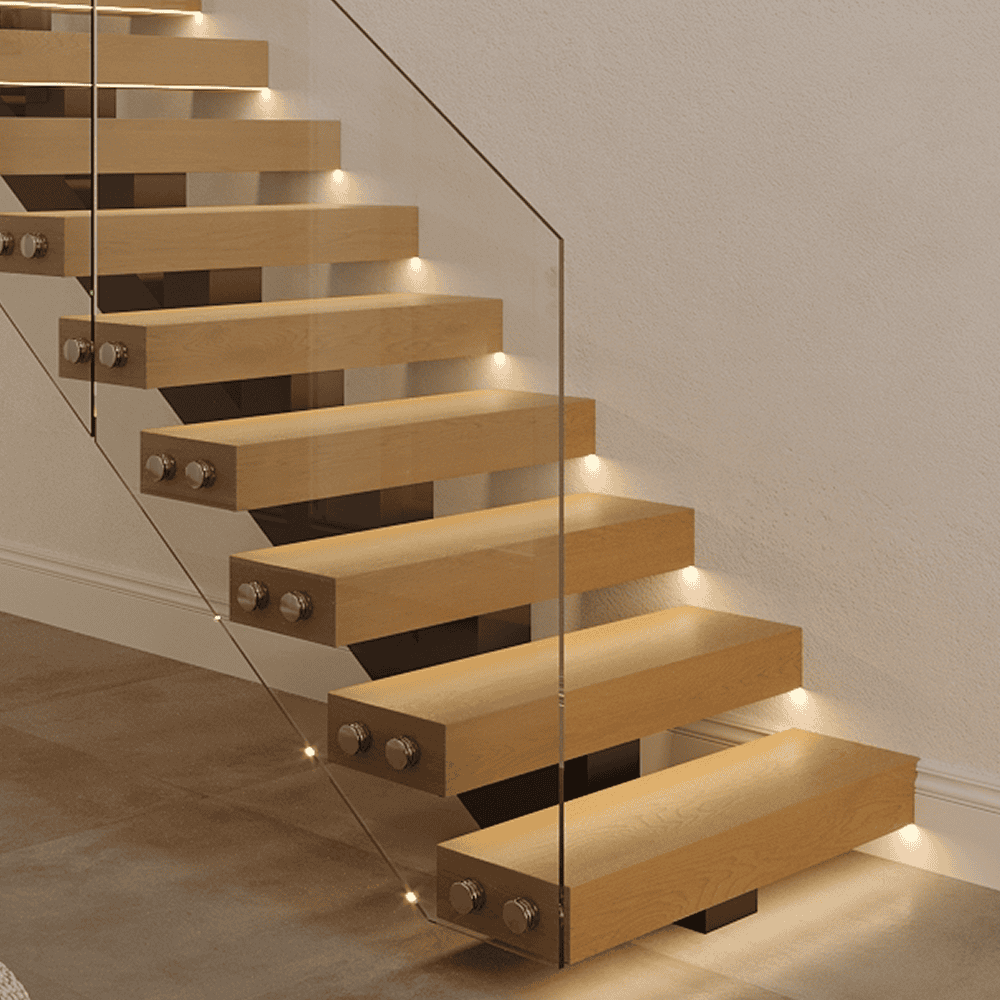
Solid Ash provides a lighter aesthetic—subtle grain, pale honey tones. It’s excellent for Scandinavian or minimalist interiors where you want the staircase to feel open and unobtrusive.
Micro-Concrete: Modern Minimalism
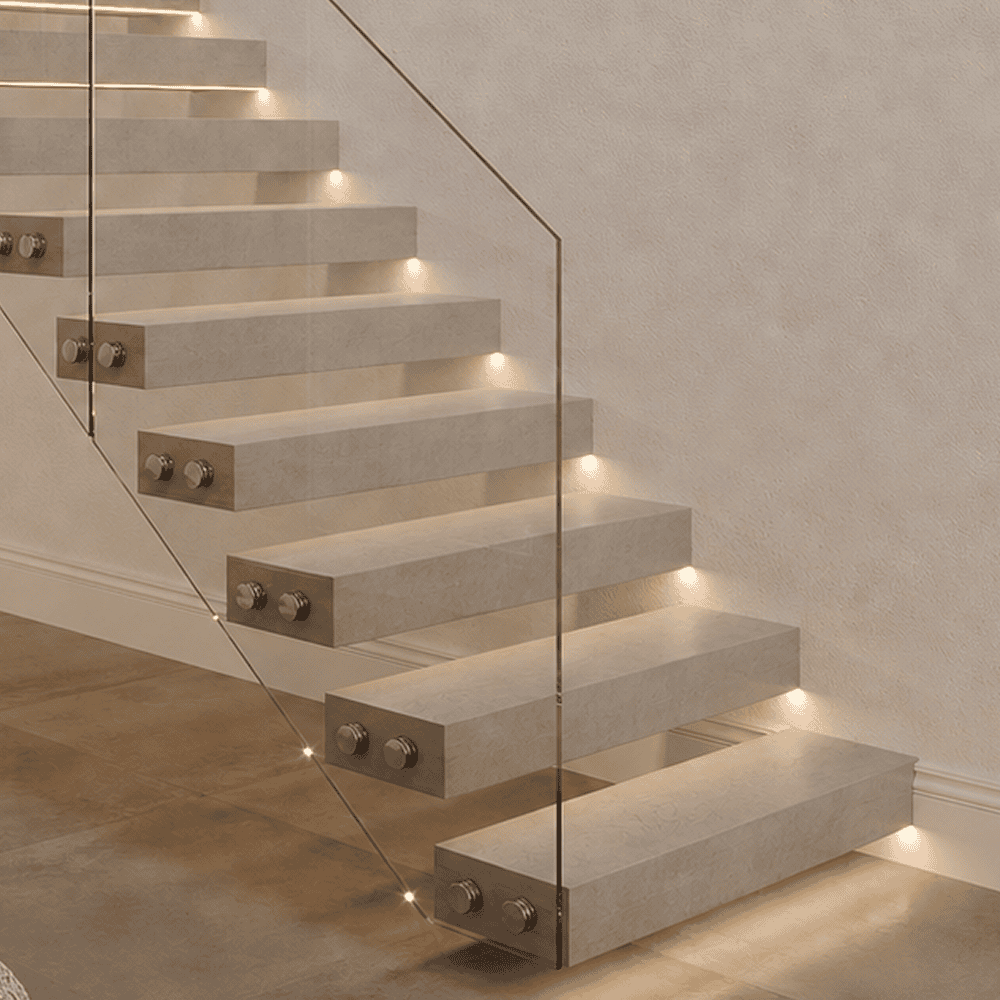
If you’re drawn to clean lines and industrial aesthetics, micro-concrete offers endless possibilities. It’s ultra-smooth, can be tinted in custom colors, and feels sculptural rather than traditional.
Micro-concrete appeals to architects and designers because it’s: versatile in finish, seamlessly integrated with other concrete elements in your space, and surprisingly durable when properly sealed.
The trade-off? It requires specialist installation and careful maintenance to prevent staining.
Glass Balustrades: Light and Openness
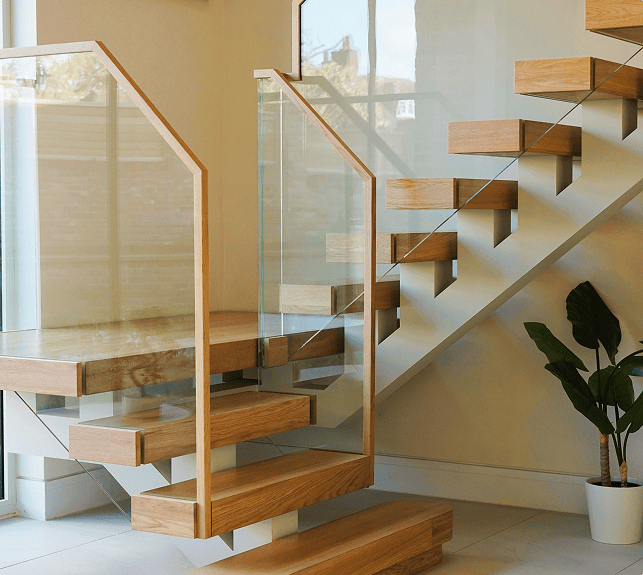
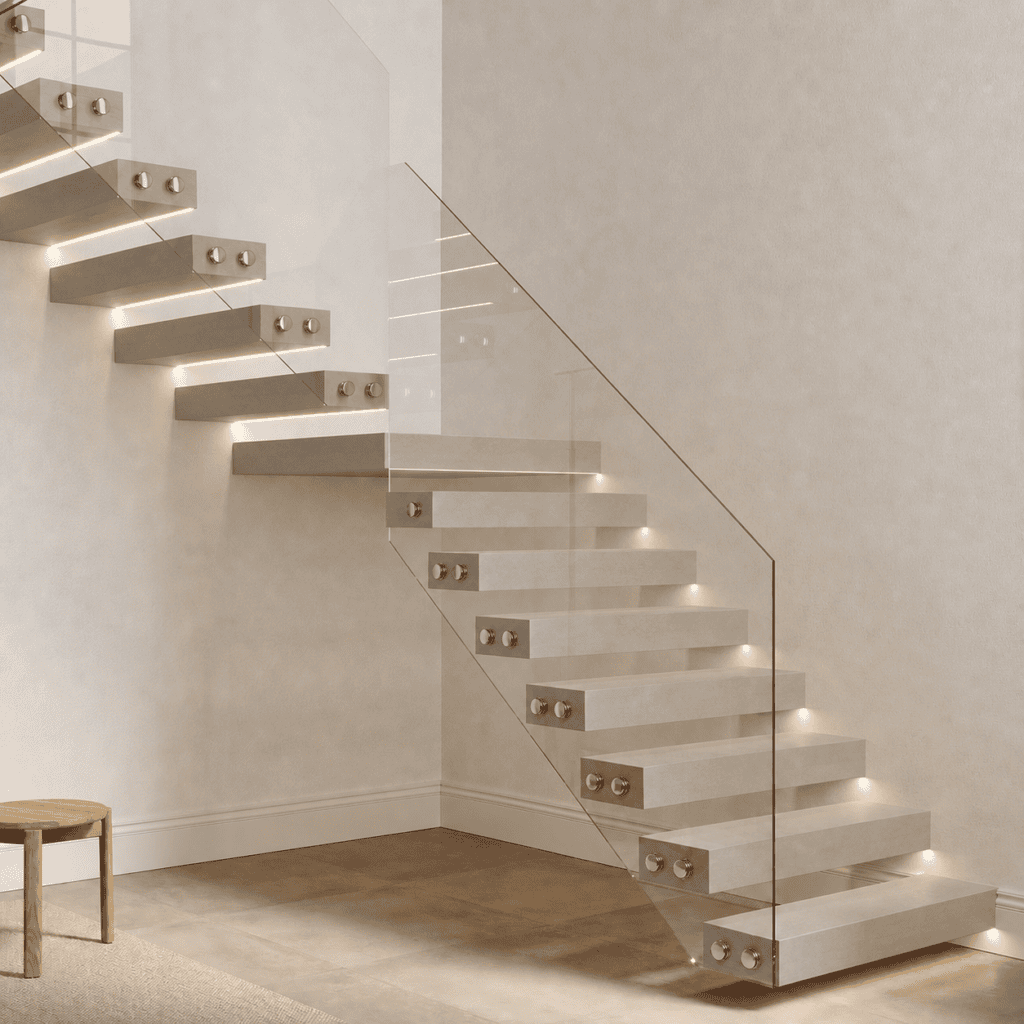
Glass panels—whether 12mm tempered or 13.5mm laminated—create visual continuity while protecting safety. Modern homes often pair wood or concrete treads with glass balustrades to maximize light and create an airy feeling.
Laminated glass (13.5mm) is the premium choice: it’s thicker, quieter underfoot, and provides extra acoustic insulation.
Beyond Materials: Design Decisions
Floating Staircases
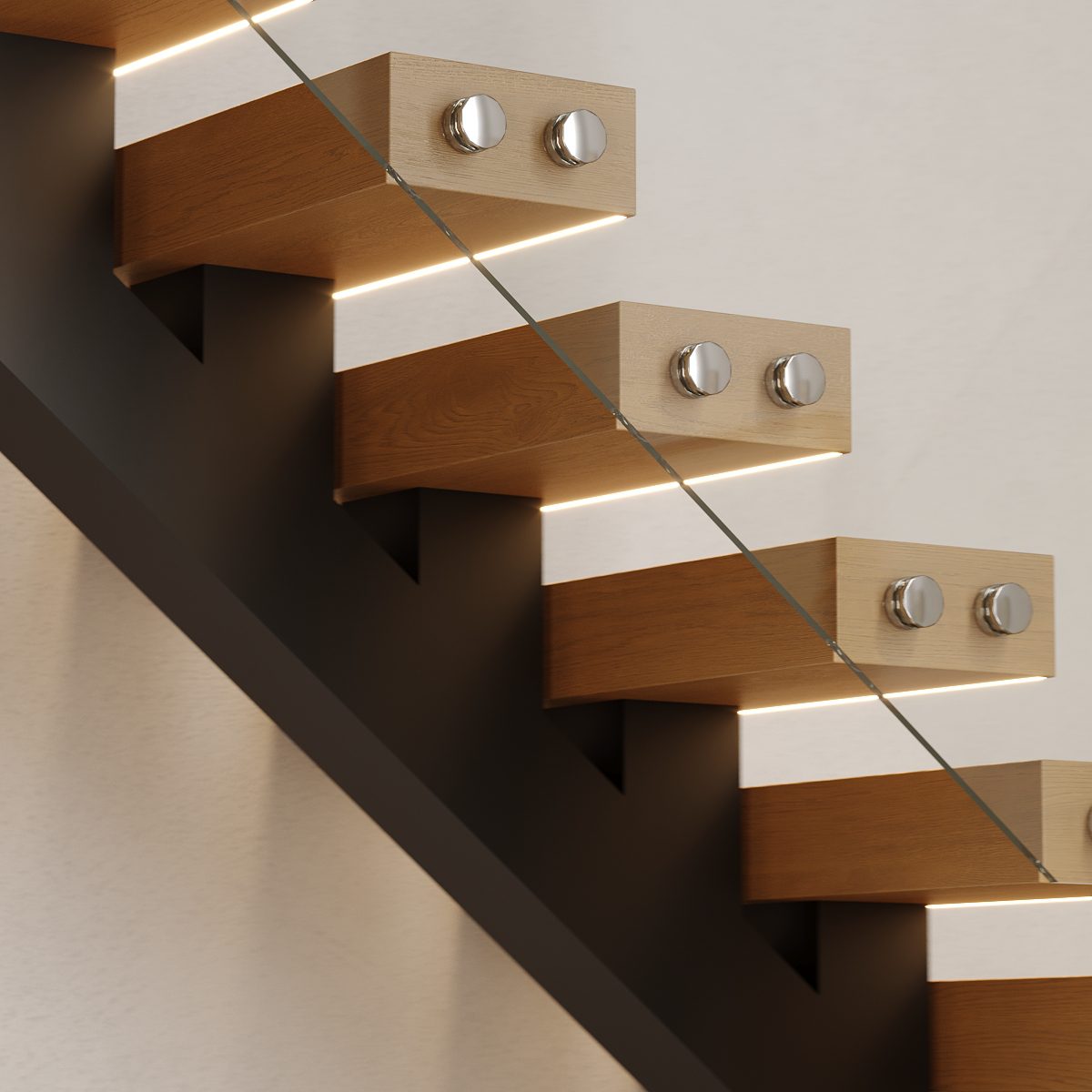
Floating (cantilevered) stairs create the illusion that steps are suspended in air. This design works brilliantly in open-plan homes where you want the staircase to disappear visually rather than dominate the space.
The engineering is precise. The structural spine anchors deeply into the wall or floor, allowing each step to appear weightless.
L-Shape and U-Shape Designs
These configurations work with your space rather than against it. An L-shaped staircase can turn a corner gracefully; a U-shaped design can become a sculptural centerpiece.
Both require careful spatial planning—you’ll need to work with a designer who understands how your staircase relates to doors, windows, and sightlines through your home.
Feature Steps
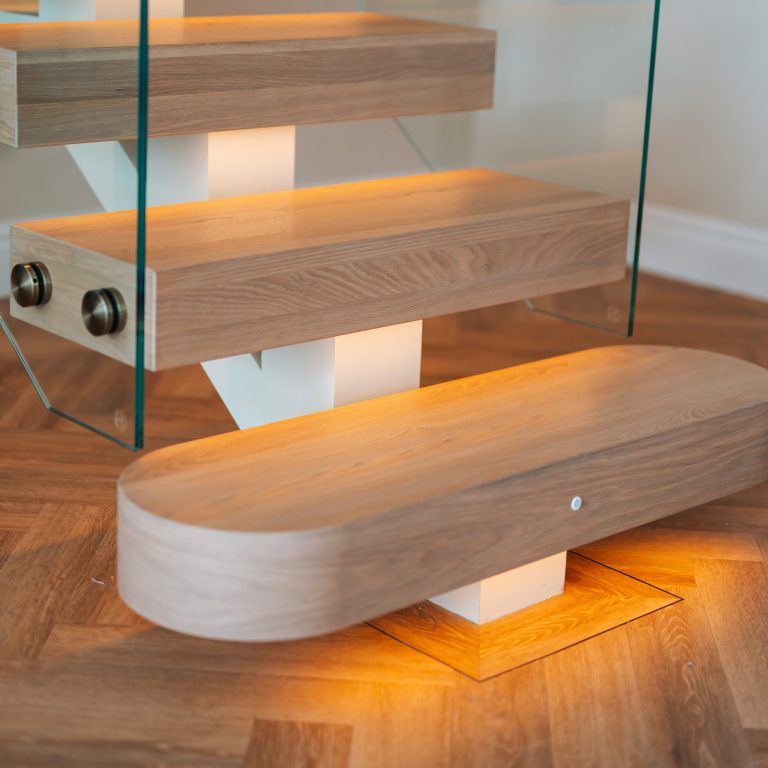
Many homeowners add a statement step—perhaps a wider tread, contrasting material, or integrated lighting. This small detail can signal the personality of your entire home and create a moment of visual delight.
The Installation Process
Professional installation is non-negotiable. A poorly installed staircase isn’t just aesthetically disappointing—it’s a safety hazard.
The typical timeline from consultation to completion is 8–12 weeks:
- Weeks 1–2: Initial consultation and detailed 3D design
- Weeks 3–6: Approval, material sourcing, and fabrication
- Weeks 7–10: Any unforeseen adjustments and final approvals
- Weeks 11–12: On-site installation (typically 1–3 days)
Our installation teams work methodically to minimize disruption to your home. Most projects are completed in a single weekend.
Durability and Maintenance
Quality materials demand quality care.
Wood stairs benefit from regular maintenance: annual oiling or sealing, cleaning with mild soap and water, and protection from direct sunlight to prevent fading. Properly maintained, solid wood stairs last generations.
Concrete finishes need sealing every 2–3 years. Avoid acidic cleaners and protect against spills.
Glass balustrades are surprisingly low-maintenance—soap and water suffice. Smudges show more than you’d expect, but they’re easy to wipe clean.
Part K and Building Regulations
If you’re in the UK, Part K building regulations govern staircase safety: tread depth, riser height, handrail diameter, and balustrade gaps are all specified.
A bespoke staircase must pass these compliance checks. This is why working with experienced designers and fabricators matters—they’ll ensure your dream staircase doesn’t violate safety standards.
Cost Considerations
Staircase pricing depends on materials, complexity, and customization. A floating staircase in solid walnut with glass balustrades costs significantly more than a straight staircase in ash with traditional spindles.
Budget for the entire package: materials, fabrication, installation, and finishes. Don’t focus on tread price per step alone—the overall investment should reflect the quality and longevity you want.
Many homeowners finance staircases as part of larger renovation projects. This often makes the cost more manageable than it initially appears.
How to Start
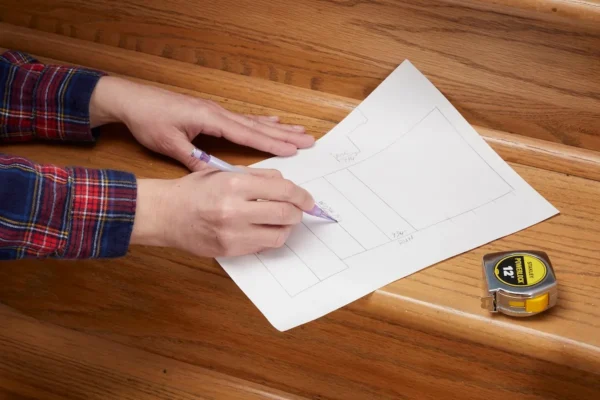
- Assess your space. Take photos and measurements of the area where your staircase will sit.
- Define your style. Collect inspiration: Pinterest, magazine clippings, other homes you admire.
- Consider practical constraints. Headroom, wall positions, floor levels—these shape what’s possible.
- Consult a designer. Bring reference images and your space. A professional consultation clarifies options and costs.
Conclusion
Your staircase doesn’t have to be an afterthought. When you choose materials thoughtfully and work with experienced designers, it becomes one of the most memorable features of your home.
Whether you prefer the warmth of solid oak, the minimalism of micro-concrete, or the openness of glass balustrades, the right staircase design will serve you beautifully for decades.