
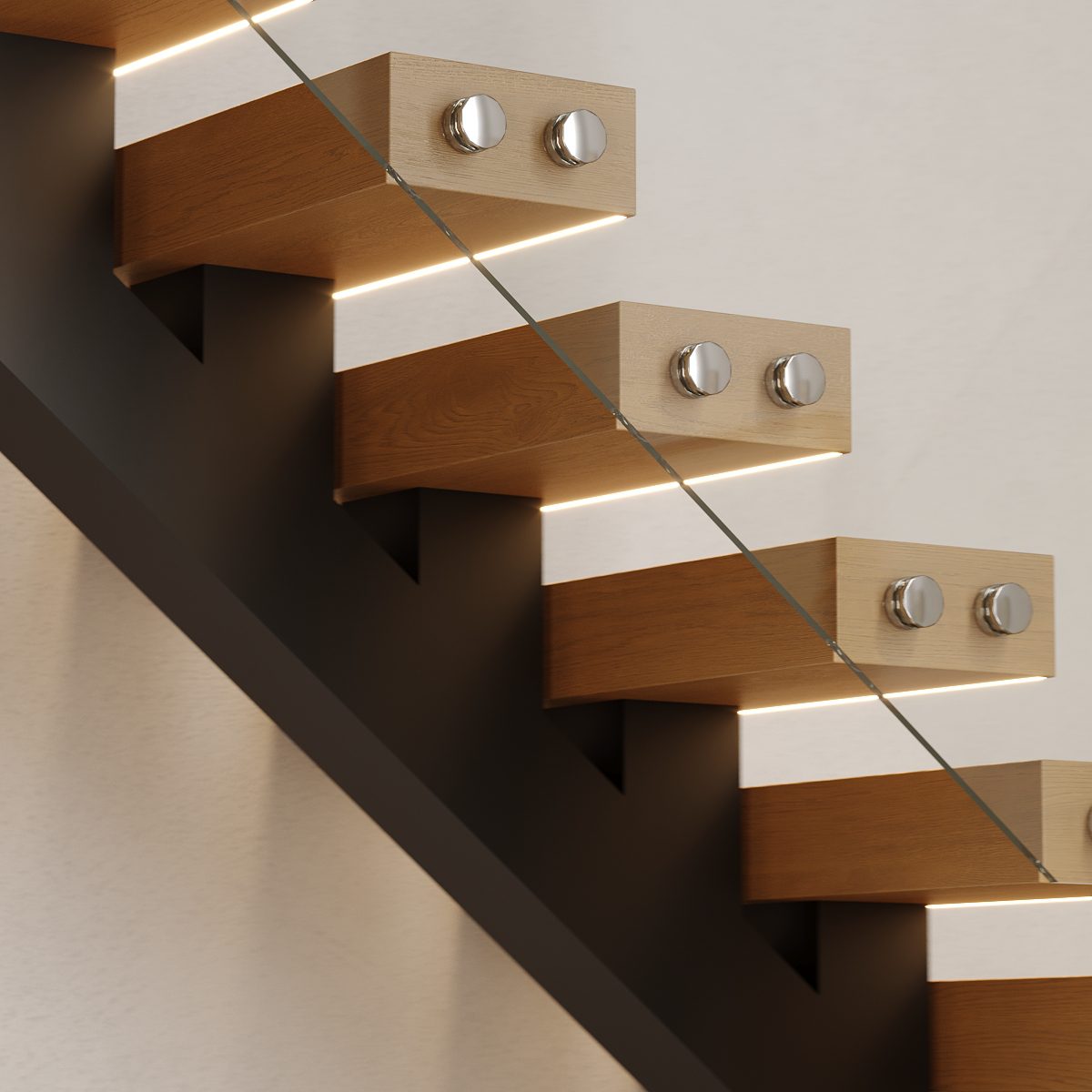
Anyone who has ever placed an order with SS Builder (or even just browsed our site) has seen that we offer a number of options. Some of these alternatives can cause confusion for customers. For example, many people do not fully understand the difference between 12 mm and 13.5 mm glass for balustrades. How do they differ?
Both are certified safety glass. Both come with the same stainless fixings, the same base channel and the same fitting team. The difference is £190 per metre. So what does the extra money actually buy? We’re going to explain this in the article!
Comparison of Two Available Options
Side by side on a spec sheet, the two look close enough. They are built differently, though, and that shows up at one specific moment. Let’s take a closer look!
1. Toughened Glass (12 mm)
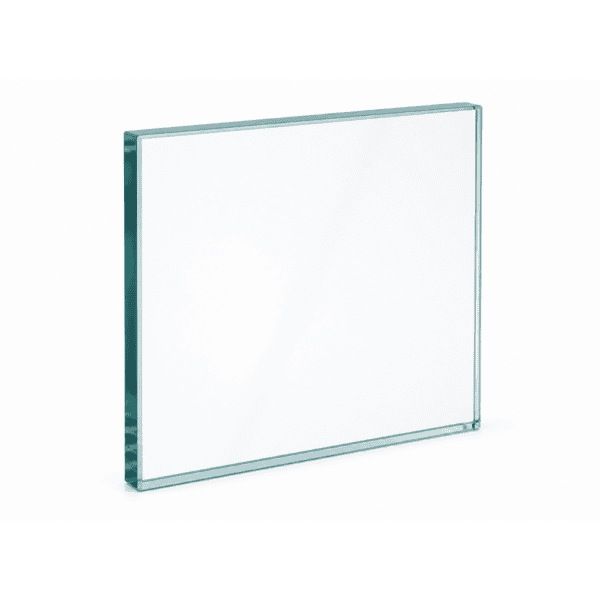
Toughened glass is a single sheet. It is heated, then cooled rapidly, which locks the surface into compression. The finished pane is roughly four to five times stronger than ordinary annealed glass. Edges are polished, clarity is good, and it is the most common balustrade glass in the UK.
It is also built to fail safely. Hit it hard on an edge or a corner and it does not throw off long sharp shards. It collapses into thousands of small blunt granules, so injuries are unlikely.
2. Laminated Glass (13.5 mm)
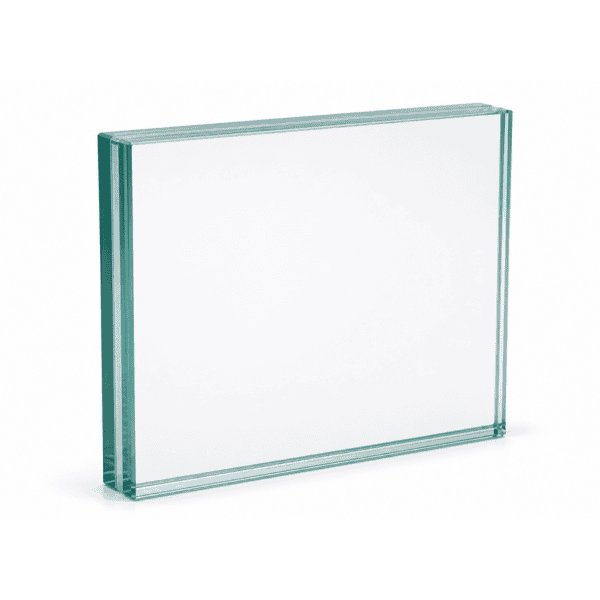
Laminated glass starts with toughened panes too. Two of them get bonded together with a structural interlayer in between. You end up with a thicker, heavier panel that feels more solid when you lean on it.
Under impact it behaves differently. The outer pane can crack, but the interlayer holds every fragment where it is. The panel stays in the frame. It looks ruined and it needs replacing, but it is still standing between you and the drop. The industry calls this post breakage integrity.
British Standard BS 6180:2011 treats that property as the deciding factor. Section 8.5.2 says that where a barrier protects a drop over 600mm, a handrail should always be fitted, unless the glass is a laminated toughened build that will stay in place if a panel fails.
What The Regulations Say
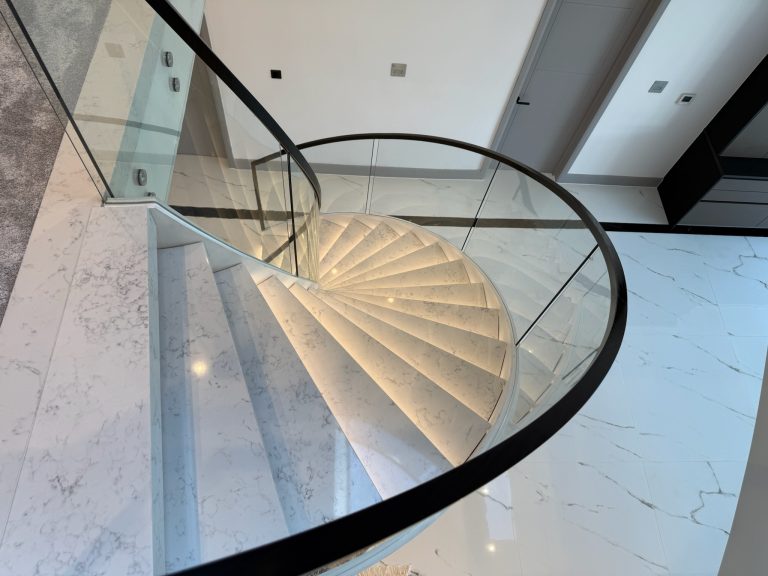
Stair flights need a handrail anyway under Approved Document K. Every Style Stairs balustrade is designed to run alongside a timber handrail or a glass top cap, and you can see the options on our handrails page. On the flight itself, both glass types are compliant. The specification starts to matter elsewhere. The short version:
- Under a 600mm drop, BS 6180 does not apply, and either glass is fine.
- On a stair flight with a continuous handrail, 12 mm toughened is a proven and compliant choice.
- Guarding a landing or floor opening with no top rail is the case that calls for laminated.
- Minimum guarding height is 900 mm inside a home, and 1100 mm for balconies and commercial work.
Two things worth saying plainly. Final glass thickness depends on panel size, fixing method and the loads a particular opening sees, so our technical team confirms the spec before anything is made.
What to Know About Metal Mesh?
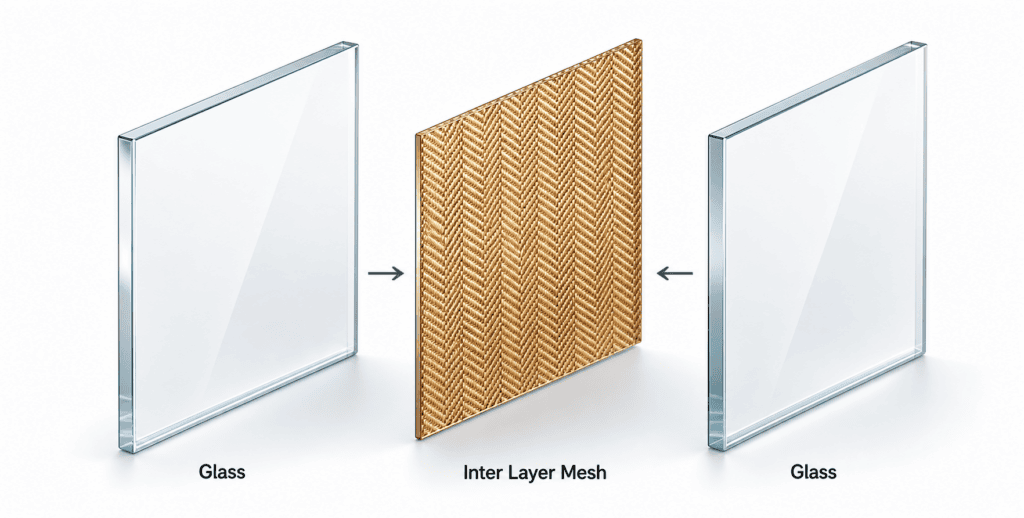
Laminated glass is two sheets bonded together, so something can live in the bond line. A woven metal mesh. A fabric. A printed or textured film. It gets sealed in permanently during lamination.
That matters more than it sounds. The pattern cannot peel, fade, collect dust or get scratched by a suitcase on its way up the stairs. Vinyl film stuck to the surface of a plain pane, the usual budget alternative, will do at least three of those within a few years.
The look is different too. Light travels through the pattern rather than bouncing off it. The panel reads as a translucent screen. It softens daylight coming down the stairwell and gives you some privacy from the hallway without making the space dark.
None of this is available on the 12 mm pane. A single sheet has no interlayer, so there is nowhere for a pattern to sit. Worth knowing that laminated does not commit you to a pattern either. Clear is one of the choices, so you can take the safety benefit and keep an entirely plain balustrade. The full set is on our glass balustrades page.
Picking A Pattern That Works In Your Home
There are four patterns to pick from, plus plain clear glass if you want the view and nothing else.
- Gilded Light is a warm golden mesh. It glows rather than blocks, and it sits naturally against oak treads and pale walls.
- Roselle Gold is a rose gold mesh with a warm metallic finish. It reads stronger than Gilded Light, so it works best where the staircase is meant to be the thing people notice.
- Bluetone is a cool woven texture. Quieter than either gold, and it suits grey, black or micro concrete schemes. Tintora is a neutral tint rather than a weave. Choose it when you want privacy and a bit of depth without a visible pattern at all.
Two practical points on top of taste. A denser finish gives more privacy but takes light out of the stairwell. And a wide, well lit hallway carries something bold like Roselle Gold easily, while a narrow Victorian stairwell usually does not. In tighter spaces, Tintora or clear glass tends to age better.
What to Choose?
As you have already known, the upgrade costs £190 per metre. Set against the price of a full staircase it is a small line item, and it applies to something that will outlast most of what else is in the house.
Stay with 12 mm toughened if the glass runs alongside a handrailed flight, you want plain clear glass. Go to 13.5 mm laminated if any of this applies. Young children or older relatives use the stairs often. You are also guarding a landing or a floor opening. You want one of the patterns. Or you just want the panel that stays put if something hits it hard. For most homes we would point you at the laminated glass.