
Most people choose a staircase by its shape and material. Lighting often comes up later, if at all. Yet it affects how safe the stairs feel every evening and how the space looks after dark.
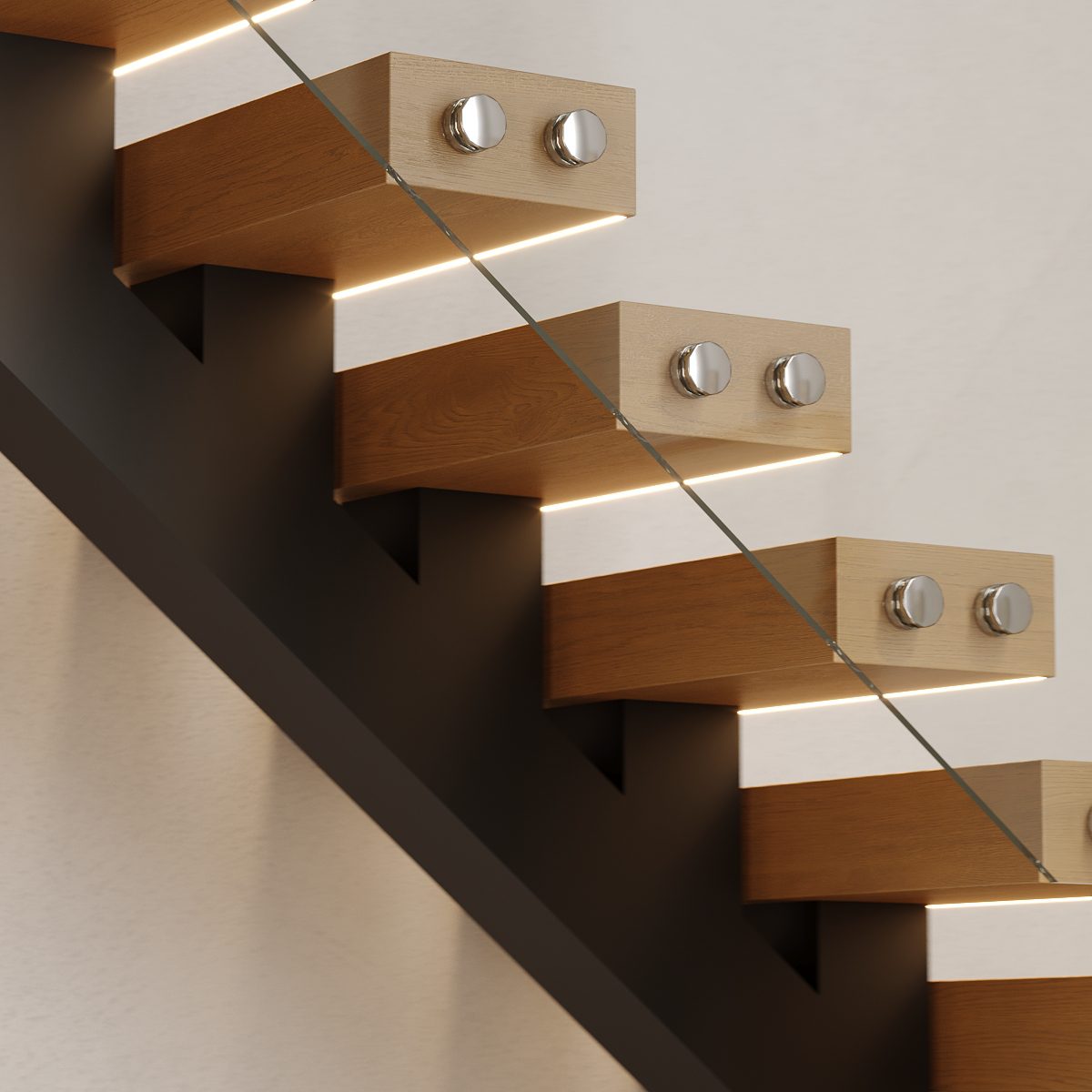
LED stair lighting is one of the add-ons in the SS Builder™. A narrow LED strip sits in a groove along the front edge of each tread. Below we explain what it does, what our version includes and whether it makes sense for your home!
Why Stair Lighting Matters for Safety
Stairs cause more serious accidents at home than most people expect. RoSPA says falls on stairs and steps lead to over 1,000 deaths a year in England and Wales. Another 43,000 people end up in hospital. Many of these falls happen in poor light. It is hard to judge the edge of a tread when the hallway is dark. Open designs make this harder still. A floating staircase has no risers, so there is less to guide your eye.
Groove lighting marks the edge of every step. You can see where to put your foot without turning on the main lights. It is most useful in a few common cases.
- Going downstairs at night for water or to check on a child
- Homes where young children or older relatives live
- Hallways with little or no natural light
Families with small children often ask about this option first. Older relatives benefit just as much. For someone less steady on their feet, a clearly visible step edge can prevent a bad fall.
LED Lighting Changes the Look of a Staircase
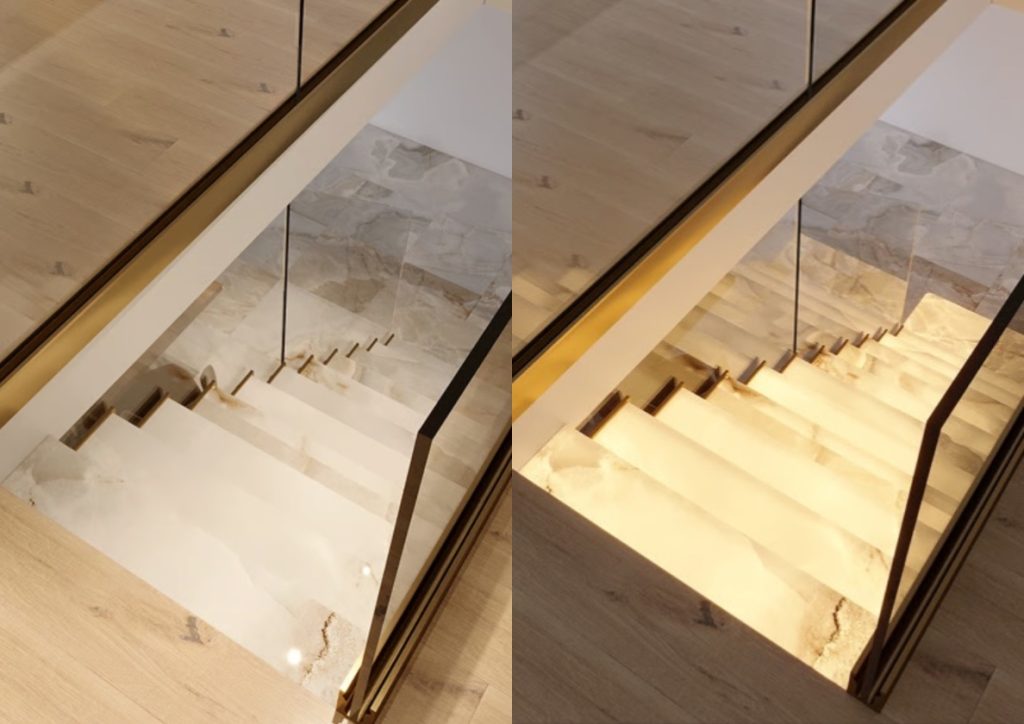
In daylight the strip is hard to spot. It sits inside the groove, so the tread keeps a clean edge. You see the material, not the lighting. In the evening the stairs look quite different. Each tread gets a thin line of soft light along its edge. The staircase stops being a dark corner and becomes a visible part of the room.
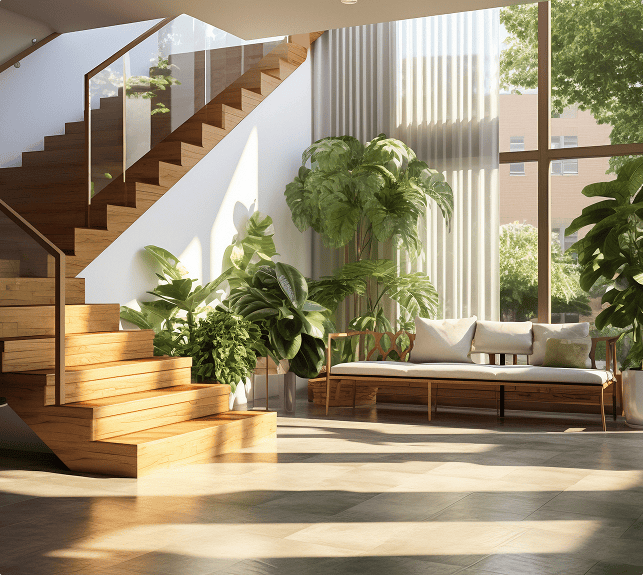
The light suits every tread in our range. Warm light brings out the grain in oak and walnut. With micro concrete threads the effect is subtler and shows how even the surface is. If you pair the treads with glass balustrades, the panels pick up some of the glow too.
Groove Lighting Versus Other Stair Lights
There are other ways to light a staircase. Wall lights are common, but they light the wall more than the steps. Riser lights sit in the vertical part of each step, so they can’t be used on designs without risers. Stick-on strips are cheap, yet they often come loose and leave wiring on show.
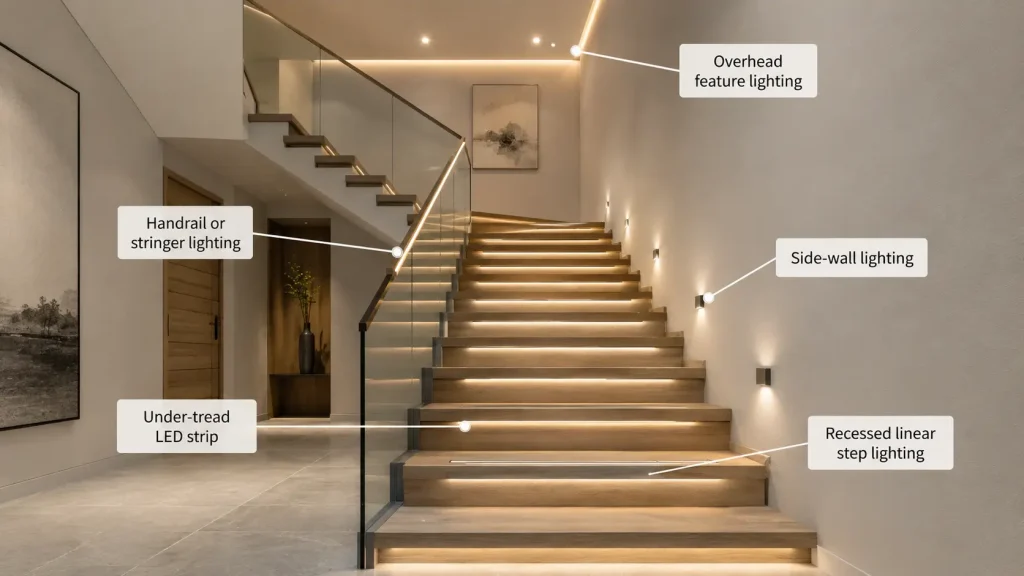
Groove lighting avoids these problems. The light sits right where your foot lands, on the edge of the tread. It works on open designs, and because it is built in, there is nothing to peel off or tidy up. For a new staircase, it is usually the neatest option.
What Our LED Lighting Includes
We fit the strips into the treads during manufacture. Nothing needs to be glued on site, and there are no loose cables to hide later. The option comes with the following.
- Motion sensors that turn the lights on and off
- A choice of warm white or cool white light
- Dimming through smart home integration
- IP65 protection against moisture and dust
All of this is part of one add-on price. You don’t pay extra for the sensors or for choosing a colour. Below we look at each feature in a bit more detail.
1. Energy Use and Running Costs
Each tread uses 2W. On a staircase with 14 treads, the total is 28W when every step is lit.
The motion sensors keep usage low. The lights come on when someone walks up to the stairs and switch off again shortly after. Ofgem puts the average electricity unit rate at 26.32p per kWh for Direct Debit customers on a standard tariff. If your stairs were lit for two hours a day, the lighting would cost you about £5 a year.
2. Lifespan and Moisture Protection
The LEDs are rated for over 50,000 hours. Because of the sensors, they only run for short periods. At two hours a day, that rating covers several decades. Most owners will never need to replace them.
The strips have an IP65 rating. This means they are sealed against dust and protected from splashes of water. You can mop or wipe the treads as usual.
3. Colour Temperature and Dimming
You can choose warm white at 2,700K or cool white at 4,000K. Warm white is the usual choice for timber treads and cosy interiors. Cool white fits modern homes with concrete, grey or white finishes. If you can’t decide, our team can advise when they review your design.
Brightness can be adjusted through smart home integration. You might keep it low late at night and turn it up when guests are over.
How Much Does LED Stair Lighting Cost
In the SS Builder™ the option costs £89 per step plus VAT. For 14 treads that is £1,246 before VAT. The builder adds this to your estimate straight away, so you see the full figure before you send the design.
For most projects this is a small share of the budget. It also costs less to add now than later. Fitting lights into finished treads means extra work on site, and the result is rarely as tidy. If you would like to spread the payments, take a look at our finance options.
So Is LED Stair Lighting Worth It?
We think it is worth it for most homes! It makes the stairs safer to use at night and costs very little to run. The LEDs last for many years without any attention. And after dark, the staircase looks finished rather than plain. If you are already designing your stairs, add the lighting now and see how the price changes. You can always remove it before you submit!