
Most staircase companies still work the same way. You send an enquiry, describe the project in a few lines, and wait for somebody to price it by hand. Two or three weeks later a number lands in your inbox.
By then you have lost a fortnight of planning time. You can build your staircase online instead and see the price as you make each choice. That is what SS Builder does. It runs on the same rates our team would use to write your quote, so the total moves when you change the structure, the materials or the finish. Let’s talk about our online staircase builder!
Staircase Quotes Take So Long
A bespoke staircase has no shelf price. It is priced from its parts, and six choices set the total. Those are the structure, the shape of the flight, the step count, the tread material, the balustrade and the fitting.
Change one and the figure moves, sometimes by thousands. Most firms deal with this by publishing a starting price and stopping there. That starting price usually buys the bare structure. Everything you can actually see gets added later, once somebody has read your enquiry and worked through a spreadsheet you will never see. We went the other way and published every rate. Our bespoke staircase cost breakdown sets them out line by line.
What to Measure Before You Start?
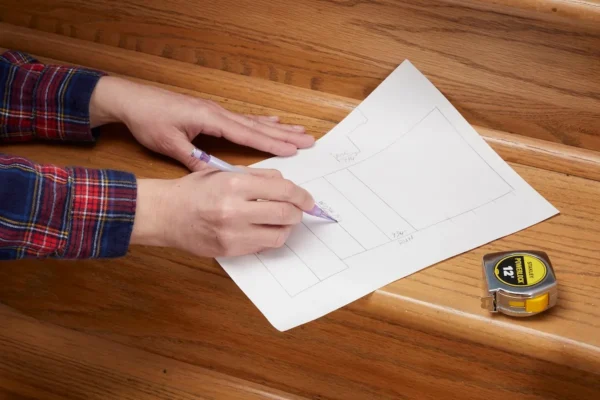
The builder needs real dimensions to give you a real figure. Spend five minutes with a tape measure before you open it and the rest goes quickly. There are four numbers to collect.
- Floor to floor height, taken from the finished floor at the bottom to the finished floor at the top. This sets your riser count, and the riser count sets your step count.
- The floor opening in the upper storey, both length and width. It limits which shapes will fit.
- Available run and width on the lower floor. This decides whether a straight flight works or whether the design needs a turn.
- Direction of travel, meaning which way you want to walk up.
Height is the one to get right. The builder calculates your step count from it, so an error of 100mm can price a thirteen step flight when you actually need fourteen. Take the measurement twice if the floors are uneven.
Building the Staircase Step by Step
Our online staircase builder follows the order a designer would use. Each answer narrows the next set of options, and the running total updates as you go!
1. Structure and Shape
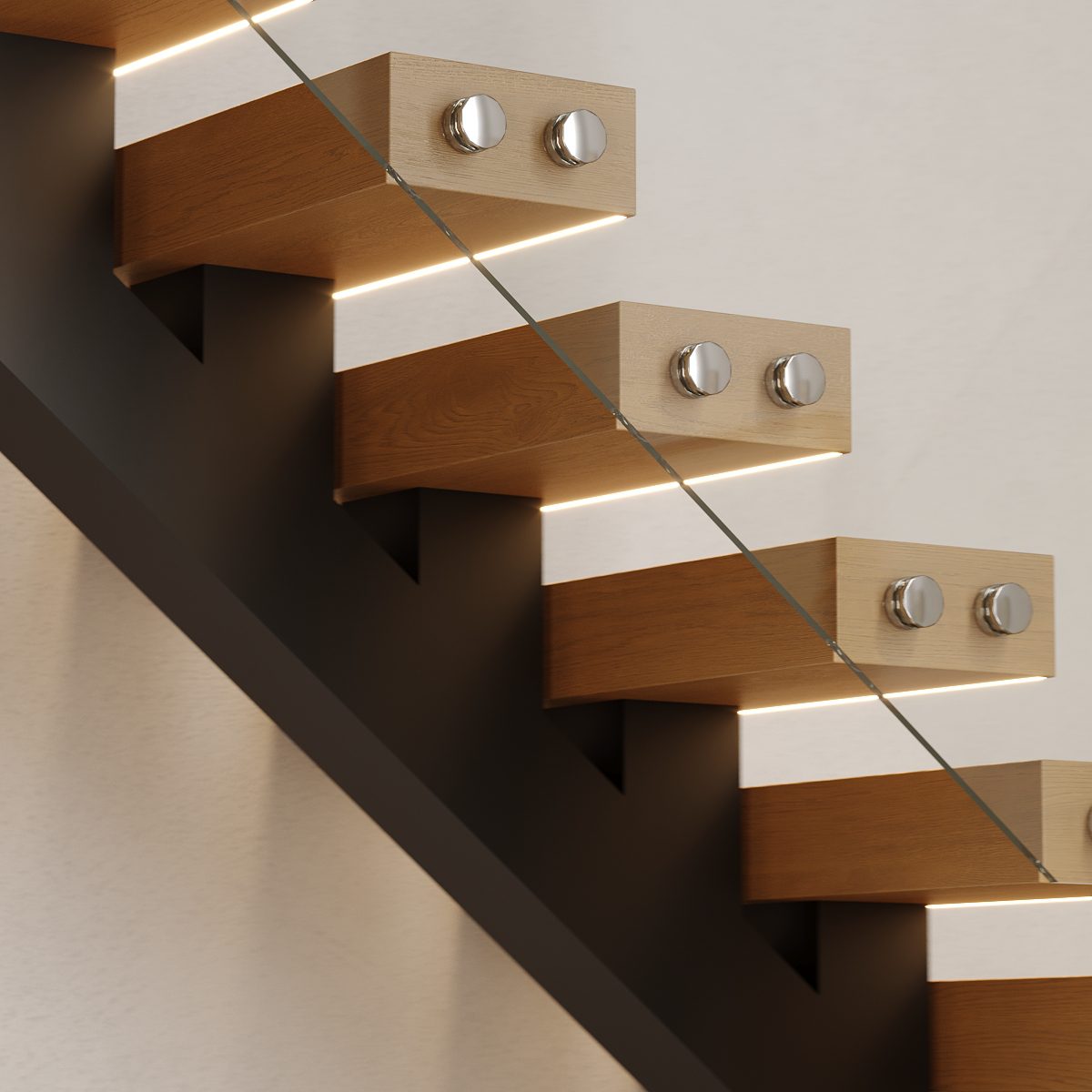
The structure is the first choice and the biggest line in any quote. A floating staircase hides its steel inside the wall, so the treads sit out with nothing visible under them. A zig-zag shows a folded steel plate below every tread. A single spine runs one beam down the middle.
For example, our floating structures start at £4,650 and the other two sit above that. Shape is charged on top. A straight flight adds nothing, while a ninety degree turn or a U shape needs extra steel and a landing, so both cost more. Take your time over this one. Most of what follows is finish rather than engineering.
2. Treads, Balustrade and Handrail
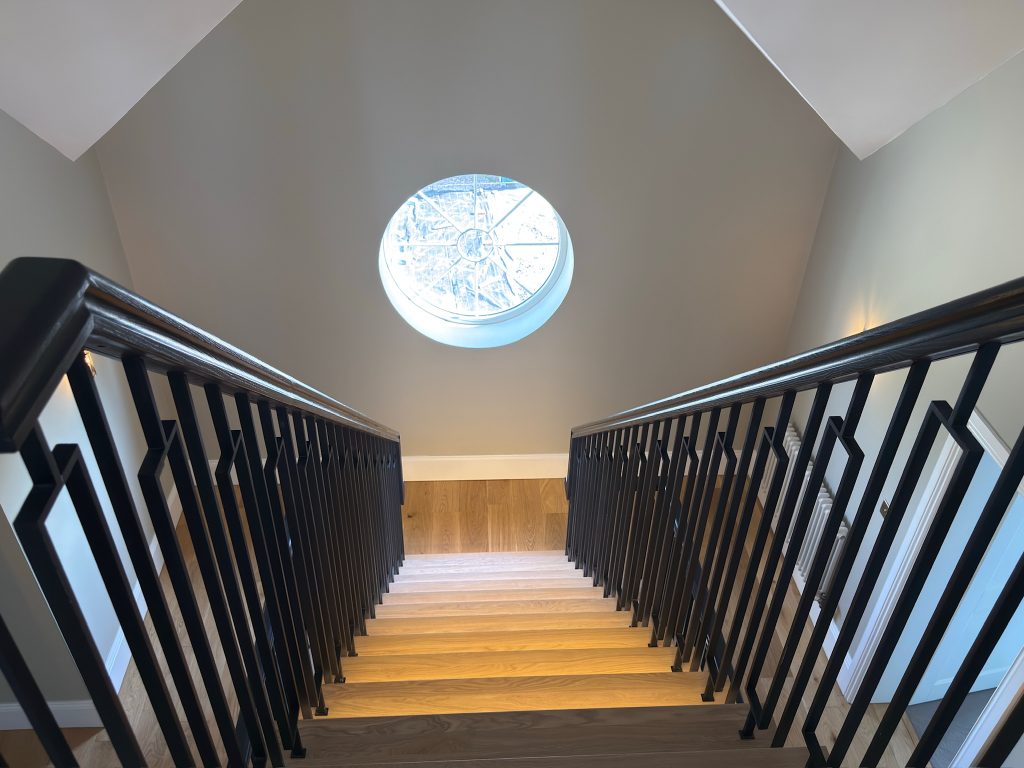
Treads are priced per step, so the material choice multiplies. Solid oak sits at £205 per step. Across a thirteen step flight, moving up to walnut or micro concrete adds more than a thousand pounds without changing anything structural.
Glass is priced by the linear metre and measured along the rake rather than the vertical drop. The choice is between 12mm toughened and 13.5mm laminated, and the two behave differently under impact. We set out the difference if you want the reasoning first. Handrails are also charged per metre and vary with the timber.
Switch between the options and watch the total. Seeing that a change costs another £300 is usually enough to settle the question.
3. Lighting, Feature Steps and Extras
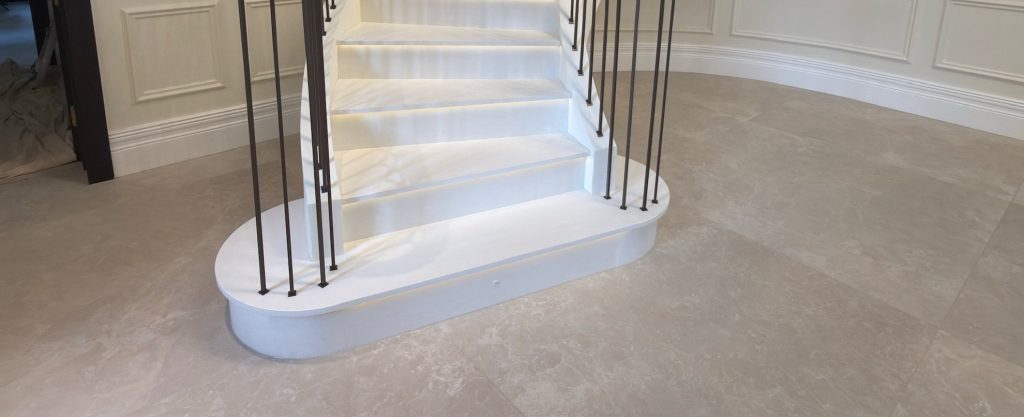
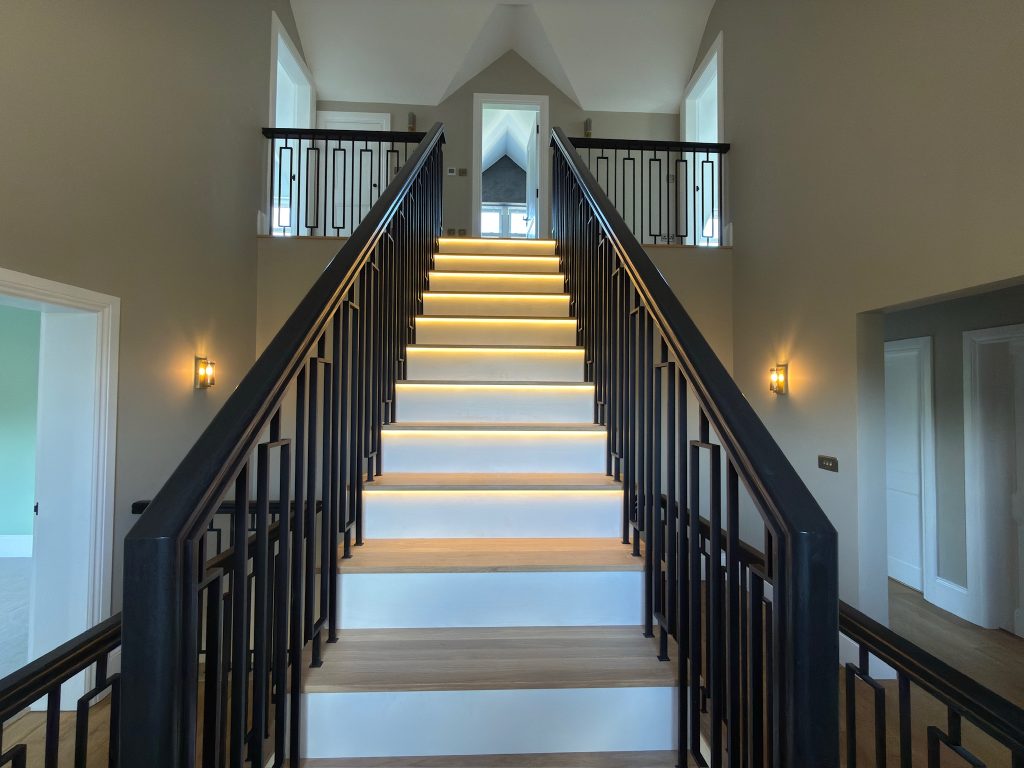
Extras are where a budget slips. They are optional, and they are also the details visitors notice first. LED groove lighting is charged per step, so it scales with the length of the flight. A feature step widens the bottom tread. Landing balustrade is priced per metre, in the same way as the main run. Add one, look at the number, then take it off again if it is not worth it. That takes seconds here and days over email.
What the Price Covers and Where VAT Sits
The figure the builder gives you is not a placeholder. It comes from the rates we publish, and those rates are current.
Prices are shown excluding VAT, which is how the trade quotes. Add the standard 20% rate to see what you will actually pay. A straight floating staircase with thirteen oak treads, a 12mm toughened glass balustrade and an oak handrail over a 2.8 metre floor height comes to £12,670 before VAT and £15,204 after it. Your own total will cover four things.
- The structure, plus a surcharge if the flight turns
- Treads, balustrade and handrail at the rates shown on screen
- The survey and design package
- Installation
Structural calculations sit outside that total. They are required on some projects and not others, depending on how the staircase loads into the building. Replacing a staircase usually falls under building control as well, and the Planning Portal explains when approval is needed.
Final Thoughts
An online builder does not replace a survey. Your staircase is still measured on site and checked properly before anyone cuts steel. Three weeks of silence does not make a price more accurate. It only stops you planning around it.
Open SS Builder, enter your height and step count, and see where you land. If you want something quicker, the price calculator uses fewer inputs and returns a figure in under a minute. Both are free, neither needs an account, and nobody rings you before you have seen a price.